



History and heritage
Luxor, Karnak and Luxor Temple
Understand the relationship between Karnak and Luxor Temple and organise your visit to the great religious complexes of ancient Thebes.
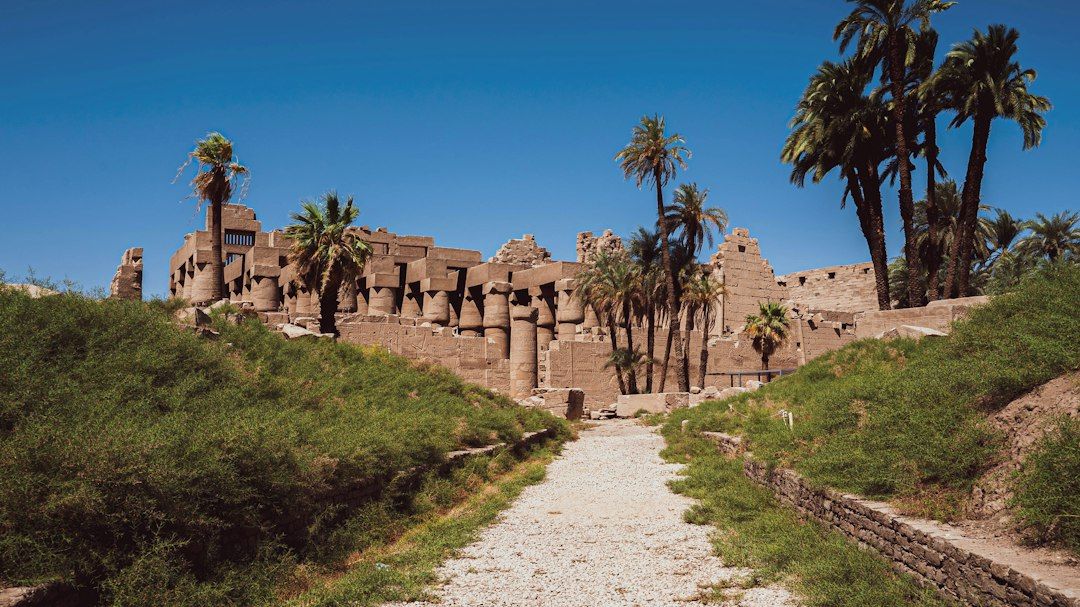
Ancient Thebes and the modern city
Luxor is an important base for discovering the heritage of Thebes. The site recognised by UNESCO includes temples and necropolises, but these spaces have different functions and should not be presented as a single undifferentiated visit.
This article focuses on the great religious complexes of Karnak and Luxor Temple. The Valley of the Kings and other choices for the west bank are covered separately, making it easier to plan the experience clearly.
Karnak: buildings accumulated over time
Karnak is not the work of a single king. The complex received additions and alterations over many reigns and includes different sacred areas. The cult of Amun was particularly important, as was the power of its priesthood. The Ministry of Tourism and Antiquities presents this long development.
In the hypostyle hall, the scale of the columns attracts attention, but it is also worth observing reliefs, inscriptions and relationships between spaces. Rather than walking only to the next photographic spot, try to recognise how the route organises the approach to the inner areas.
The relationship with Luxor Temple
Karnak and Luxor Temple were linked by a processional route associated with the Opet festival. This connection, described by the Ministry, helps us understand the places as part of a religious geography.
We suggest learning about the relationship between them before starting your visit. The explanation turns an apparently simple journey into an opportunity to consider the ancient city, its rituals and the participation of different groups.
Context matters more than quantity
Temples can seem repetitive when an itinerary provides only kings’ names and dates. Good interpretation should select scenes and explain why they are there. Who commissioned an intervention, which activities a space housed and what changed later are useful lines of interpretation.
There is no need to decipher every surface. Choosing a few well-explained examples usually makes the visit more memorable than accumulating unrelated information.
Organising your days in Luxor
Avoid trying to cover all the heritage on both banks in a single day. Combine time at the temples with rest, meals and journeys. If your trip includes a cruise, check which visits are already in the programme so you do not pay again for equivalent activities.
An overnight stay does not automatically mean a full day available: arrival, embarkation and departure can considerably reduce usable time. Read the itinerary by timings and activities, not only by the number of nights.
Ask for a plan that distinguishes temples, necropolises and free time in Luxor.
Continue exploring
- History of Egypt: beyond the age of the pharaohs
- Religion and images in ancient Egypt
- The Valley of the Kings and Luxor’s west bank
- Nile cruises: how to choose your experience
Itineraries that turn reading into travel
Compare these options and check the complete programme, dates, included services and current prices on each itinerary’s page.
Classic Egypt: Cairo and a Nile cruise
Explore this itinerary →Essential Egypt: Cairo and a Nile cruise
Explore this itinerary →An attraction featured in the guide is not necessarily included in every programme. Check the itinerary before choosing.
Bring your interests into your trip
Tell our team which places and topics have sparked your curiosity. We will assess a route that suits your time and preferred pace.
Plan my trip to EgyptEditorial review: 1 October 2026. Official sources are cited throughout the articles. Opening arrangements, requirements and inclusions must be confirmed for your trip.